
Introduction
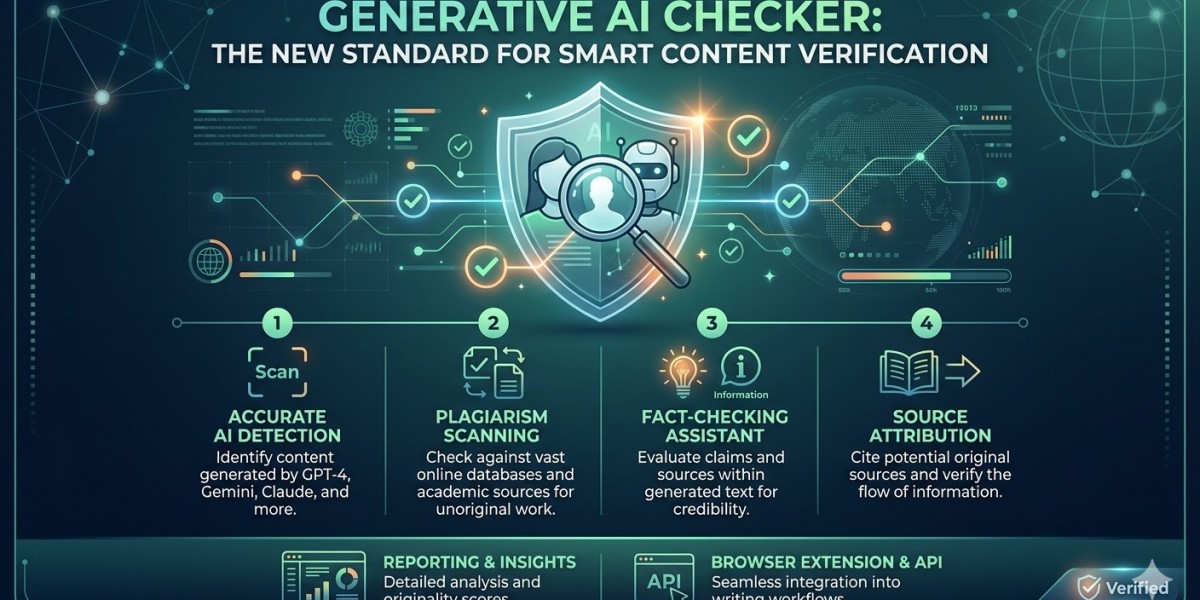
A 生成aiチェッカー is a tool designed to identify whether a piece of content has been written by a human or created using artificial intelligence. With the rapid growth of AI writing tools, these checkers have become important in education, publishing, and digital marketing. Their main purpose is to ensure content authenticity and maintain trust in online information.
What is a Generative AI Checker?
A generative AI checker is a software system that analyzes text and determines the probability of AI involvement. It does not copy-check content like plagiarism tools. Instead, it studies writing style, sentence structure, and predictability patterns.
AI-generated text usually follows structured and highly predictable patterns, while human writing tends to be more natural, emotional, and varied. The checker identifies these differences to make a judgment.
How Generative AI Checker Works
A generative AI checker works using machine learning models trained on large datasets of both human-written and AI-generated text.
First, it breaks the content into smaller parts such as words and sentences. Then it analyzes how predictable each word is based on context. This is often called “perplexity.” Lower perplexity usually indicates AI-generated content.
Next, it checks “burstiness,” which measures variation in sentence length and structure. Human writing typically shows more variation, while AI writing is more uniform.
Finally, the system produces a score or percentage showing the likelihood that the text was generated by AI.
Uses of Generative AI Checker
Generative AI checkers are used in many industries.
In education, they help teachers verify whether students have written assignments themselves.
In SEO and digital marketing, they ensure content is original and human-like before publishing.
In journalism and publishing, they help maintain content authenticity and trust.
Businesses also use them to check reports, documents, and communication quality.
Benefits of Generative AI Checker
One major benefit is content verification, helping users confirm whether text is human or AI-generated.
Another benefit is quality control, ensuring that content meets originality standards before publishing.
It also improves transparency, which is important in a world where AI-generated content is widely used.
Additionally, it saves time by quickly analyzing large amounts of text.
Limitations of Generative AI Checker
Despite their usefulness, generative AI checkers are not perfect.
They can sometimes give false results, especially when human writing is very structured or formal.
They also struggle to keep up with advanced AI models that generate more human-like text.
Because of this, results should be considered as guidance rather than absolute truth.
Future of Generative AI Checker
The future of generative AI checkers looks promising. As AI models become more advanced, detection systems will also improve.
Future tools may offer real-time checking while writing and integrate directly into content platforms.
They may also become smarter in understanding context, tone, and intent, not just patterns.
Conclusion
An AIチェッカー plays an important role in maintaining content authenticity in the digital world. It helps identify AI-generated text, supports quality control, and builds trust in online information.
Although not fully accurate, it remains a valuable tool as artificial intelligence continues to grow and evolve.