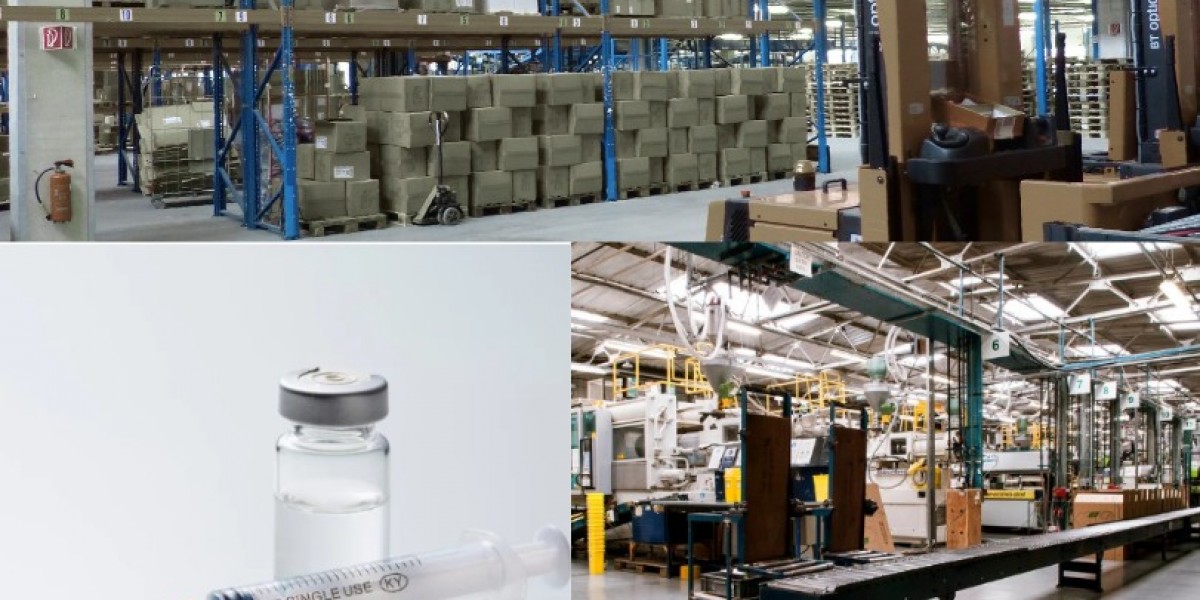

Plastic products are part of our everyday lives. From household containers and automotive components to medical equipment and electronic housings, countless items are made using plastic manufacturing processes. Behind many of these products is a highly efficient technique known as plastic injection molding.
This manufacturing method has become popular because it allows businesses to produce detailed, durable, and consistent plastic components in large quantities. But how does a simple plastic material turn into a finished product that is ready for everyday use? The process involves several carefully planned stages, from selecting the right raw materials to designing molds, shaping components, and performing quality inspections.
Let's explore how plastic injection molding works and why it plays such an important role in modern manufacturing.
1. Selecting the Right Raw Materials
Every successful plastic product starts with choosing the right raw material. Different applications require different material properties, such as flexibility, strength, heat resistance, durability, or chemical resistance.
Common materials used in plastic injection molding include:
Polypropylene (PP): Lightweight, flexible, and resistant to many chemicals. It is widely used for packaging, containers, and household products.
Polyethylene (PE): Known for its toughness and moisture resistance, making it suitable for caps, closures, and storage products.
Acrylonitrile Butadiene Styrene (ABS): Offers good impact resistance and a smooth surface finish, making it useful for automotive and electronic components.
Polycarbonate (PC): Provides high impact strength and transparency for applications that require durability and clear surfaces.
Nylon (PA): Commonly used for engineering components that need strength, wear resistance, and reliable performance.
The choice of material depends on the product's intended use, design requirements, operating environment, and production budget. Selecting the correct plastic resin at the beginning helps manufacturers achieve better product performance and reduce manufacturing problems later.
2. Designing the Product and Mold
Once the material is selected, the next step is product and mold design. This stage has a major influence on the quality, appearance, and functionality of the final product.
Manufacturers use computer-aided design (CAD) software to create detailed digital models of plastic components. These designs help engineers understand the product's dimensions, wall thickness, curves, openings, and other important features.
The mold is designed around the product's shape. It generally consists of two main sections that come together to form a cavity. Molten plastic is injected into this cavity, where it takes the required shape.
A well-designed mold should consider several factors, including:
Uniform wall thickness
Proper cooling channels
Suitable gate and runner locations
Easy removal of the finished component
Appropriate draft angles
Material shrinkage during cooling
Good mold design can reduce defects, improve production efficiency, and help maintain consistent product dimensions.
3. Preparing the Plastic Material
Before the actual molding process begins, plastic resin is prepared for production. Most injection molding materials are supplied in the form of small pellets or granules.
These pellets are loaded into the injection molding machine's hopper. Depending on the material, drying may be necessary to remove moisture before processing. This is particularly important for moisture-sensitive materials such as nylon and polycarbonate.
Some manufacturers also use approved colorants or additives to achieve specific product characteristics. These may include improved UV resistance, enhanced flexibility, or a particular color.
Proper material preparation helps maintain consistent melting behavior and reduces the possibility of defects during production.
4. Melting and Injecting the Plastic
This is the main stage of the plastic injection molding process.
The prepared plastic pellets move from the hopper into a heated barrel. Inside the barrel, a rotating screw transports the material forward while heat and mechanical movement gradually melt it into a uniform molten plastic.
Once enough material has been collected, the injection molding machine pushes the molten plastic into the closed mold under controlled pressure and speed.
The plastic flows through the mold's channels and fills the cavity, taking the shape of the product design.
The machine must maintain suitable temperature, injection pressure, and speed throughout this stage. Incorrect settings can lead to incomplete filling, air pockets, flash, or other production defects.
Modern injection molding machines allow manufacturers to control these settings accurately, helping produce components with consistent dimensions and appearance.
5. Cooling and Solidification
After the mold cavity is filled, the molten plastic needs time to cool and become solid.
Cooling channels inside the mold circulate a cooling medium, usually water, to remove heat from the plastic. As the material cools, it gradually hardens and takes its final shape.
This stage is important because cooling affects both product quality and production time.
Uneven cooling may cause warping, shrinkage, or dimensional variations. For this reason, mold designers carefully plan cooling channel positions to distribute temperature more evenly.
The cooling time depends on several factors, including material type, product thickness, mold temperature, and component design.
Efficient cooling helps manufacturers improve production cycles while maintaining product quality.
6. Removing the Finished Product from the Mold
Once the plastic component has cooled sufficiently, the mold opens and the finished part is released.
Most injection molding machines use an ejector system to push the component out of the mold. Ejector pins or other release mechanisms help remove the product without damaging its surface or shape.
At this point, the product may still have small excess plastic sections, such as runners, gates, or flash. These are removed during the next stage if necessary.
The finished component is then collected for inspection and any additional processing.
7. Trimming, Finishing, and Assembly
Not every plastic product is ready for use immediately after leaving the mold. Some components require additional finishing to achieve the desired appearance and functionality.
Depending on the product, finishing operations may include:
Removing excess plastic from edges
Polishing or improving surface appearance
Printing logos, labels, or product information
Adding textures or decorative finishes
Assembling multiple plastic components
Installing metal inserts or other required parts
For example, a plastic electronic housing may require additional holes, labels, or assembly with other components before it becomes a complete product.
These finishing operations help transform molded components into market-ready products.
8. Quality Inspection and Testing
Quality control is an essential part of plastic manufacturing. Even a small dimensional variation can affect how a component fits or performs in its final application.
Manufacturers inspect finished products to make sure they meet the required specifications.
Common quality checks include:
Dimensional measurements
Surface appearance inspections
Weight and consistency checks
Strength and impact testing
Fit and assembly testing
Inspection for cracks, bubbles, warping, and flash
Depending on the application, additional testing may be required to verify heat resistance, chemical resistance, or other performance characteristics.
A reliable plastic injection molding factory follows documented quality procedures to maintain consistency across production batches and identify potential problems early.
Why Plastic Injection Molding Is Important for Modern Manufacturing
Plastic injection molding offers several advantages that make it suitable for a wide range of industries.
High-volume production: Once the mold is ready, manufacturers can produce large quantities of identical components with relatively short cycle times.
Design flexibility: The process supports complex shapes, detailed features, and different product sizes.
Consistent quality: Properly controlled machines and molds help maintain uniform product dimensions and appearance.
Material versatility: Manufacturers can work with different plastic materials depending on the required application.
Reduced material waste: Production can be planned to use materials efficiently, while suitable runners and sprues may sometimes be reprocessed, depending on material requirements and product specifications.
These benefits make injection molding a practical choice for industries such as automotive, electronics, packaging, healthcare, and consumer goods.
The Growing Role of Plastic Manufacturing in Thailand
Thailand has developed a strong manufacturing sector, making it an important location for businesses looking for plastic production and related industrial services.
Companies searching for a reliable plastic factory in Thailand often consider factors such as production capacity, technical expertise, material availability, quality standards, and delivery schedules.
Choosing an experienced plastic injection molding factory can help businesses turn product designs into functional components while maintaining consistent manufacturing quality.
In addition to injection molding, other processes are also used to manufacture plastic products. For example, plastic thermoforming Thailand is relevant for businesses that need products made by heating plastic sheets and forming them over specially designed molds. This technique is commonly used for trays, packaging, protective covers, and larger plastic panels.
When comparing plastic manufacturers in Thailand, businesses should look beyond production costs. It is equally important to evaluate mold-making capabilities, quality control procedures, technical support, material selection, and the manufacturer's ability to handle both small and large production requirements.
Working with the right manufacturing partner can make a significant difference in product quality, production efficiency, and long-term business growth.
Conclusion
A plastic injection company is much more than simply melting plastic and shaping it into a product. It is a detailed manufacturing process that combines material selection, engineering, mold design, machine operation, cooling, finishing, and quality inspection.
Each stage contributes to the final result. When these steps are properly managed, manufacturers can produce reliable plastic components that meet different industrial and consumer requirements.
As manufacturing technology continues to develop, plastic injection molding will remain an important solution for businesses that need precision, consistency, and efficient large-scale production. Whether producing everyday household items or specialized industrial components, the process helps transform basic plastic raw materials into useful finished products.



