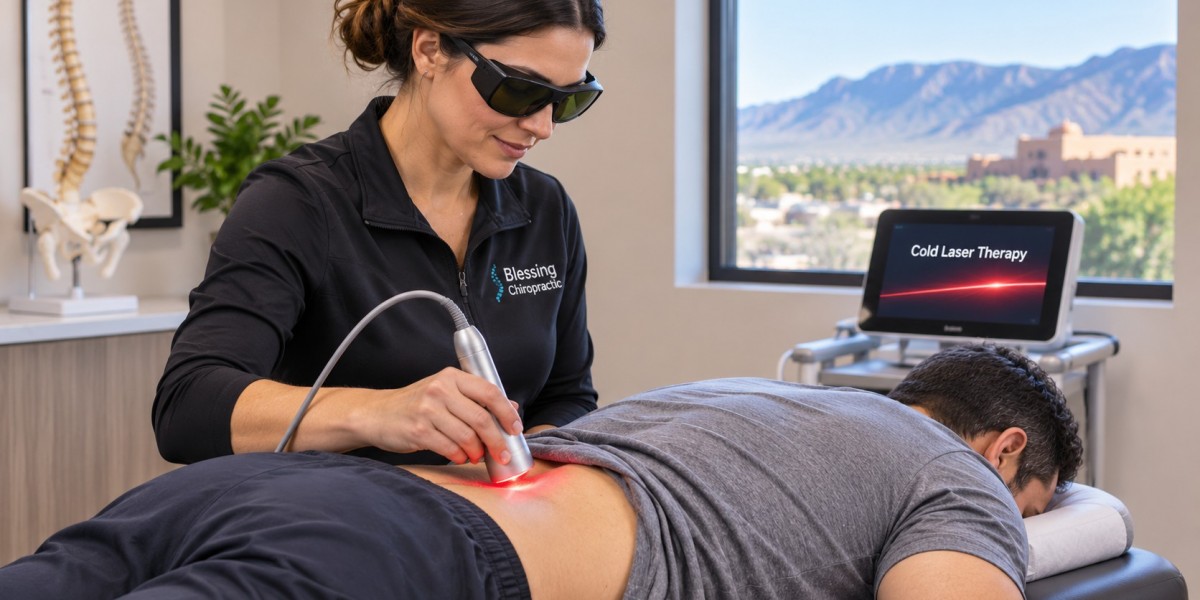

There is a particular kind of frustration that comes with a soft tissue injury. Maybe you rolled your ankle on a trail in the Sandia foothills. Maybe your hamstring grabbed halfway through a pickleball game. Or maybe someone rear-ended you at a red light on Montgomery, and now, a few days later, your neck feels like it is made of concrete.
The X-rays are clear. Nothing is broken. Everyone tells you it will heal on its own. And it probably will, eventually. But in the meantime, you are sore, you are stiff, and you are tired of waiting.
In my experience, this is exactly the point where people start asking about options that might help their bodies recover a little faster and a little more comfortably. One of the options that comes up more and more is cold laser therapy.
In this article I want to focus specifically on injury recovery: how soft tissue heals, where cold laser therapy in Albuquerque fits into recovery from sports injuries and car accidents, what the research suggests, how it combines with other care, and what precautions matter most.
Key Takeaways
- Cold laser therapy, also called low-level laser therapy (LLLT) or photobiomodulation, uses low-intensity light to support tissue repair and ease pain without heat.
- It is commonly used for sprains, strains, muscle tears, tendonitis and whiplash-related soft tissue injuries.
- Research suggests laser light may help modulate inflammation after soft tissue injury, though results depend on dose and device settings.
- After a car accident, a medical evaluation should come first to rule out fractures, head injuries and other serious problems.
- Laser therapy works best alongside chiropractic care, manual therapy and progressive rehab exercises.
- Sessions are short, painless for most people and require no downtime.
Why Injury Recovery Looks a Little Different in Albuquerque
I think where you live shapes how you get hurt and how you recover, and Albuquerque has its own quirks.
Terrain. Trails in the foothills and the Sandias are rocky, steep and uneven. Rolled ankles, knee strains and falls are common, even for experienced hikers.
Altitude. At roughly a mile above sea level, visitors and even locals pushing hard can tire faster than expected. Fatigue changes how you move, and tired muscles are more prone to strains.
Dry air. Low humidity makes mild dehydration easy, and dehydrated muscles tend to cramp and tighten more readily.
Year-round activity. Because the weather is usually friendly, many people stay active through every season, which means overuse injuries can build without a natural break.
Busy roads. Commutes on I-25, I-40 and major corridors like Paseo del Norte and Montgomery mean plenty of fender benders, and with them, whiplash and back strain.
All of this is why cold laser therapy in Albuquerque often comes up in conversations with runners, hikers, cyclists and drivers alike.
How Soft Tissue Injuries Heal
Before talking about laser therapy, it helps to understand what your body is already doing after an injury. Muscles, tendons and ligaments generally heal in three overlapping stages.
Stage 1: Inflammation
In the first few days, your body increases blood flow to the injured area and sends in immune cells to clean up damaged tissue. This causes the familiar swelling, warmth, redness and tenderness. Inflammation is not the enemy. It is a necessary first step. The problem comes when it lasts longer than it should or is more intense than needed.
Stage 2: Repair
Over the following days to weeks, your body starts laying down new tissue to bridge the damage. This early repair tissue is somewhat disorganized, a little like a quick patch on a torn pair of jeans.
Stage 3: Remodeling
Over weeks to months, that new tissue slowly matures, strengthens and reorganizes based on the loads you put on it. This is where rehab exercises become essential.
The goal of good recovery care is to support each stage without disrupting it. That means calming excessive inflammation early, encouraging healthy repair, and guiding tissue to remodel in a strong, flexible way.
Where Cold Laser Therapy Fits In
Cold laser therapy uses specific wavelengths of red or near-infrared light that pass through the skin and are absorbed by cells in the tissue below. Inside those cells, structures called mitochondria take in the light energy and are thought to produce cellular energy more efficiently.
In the context of injury, that may support:
- Modulating inflammation, so swelling and irritation settle more efficiently
- Tissue repair, by giving cells more resources to rebuild
- Circulation, bringing oxygen and nutrients to the injured area
- Pain relief, which makes it easier to move and participate in rehab
If you want a sense of how one local clinic describes the treatment and the conditions it is used for, a page on cold laser therapy in Albuquerque covers sports injuries, soft tissue injuries, auto accident injuries and more.
What the Research Suggests About Acute Injuries
I want to be honest about the evidence, because injury recovery is an area where overpromising is common.
A systematic review published in Photomedicine and Laser Surgery looked specifically at low-level laser therapy for acute pain from soft tissue injury. The authors found strong evidence from controlled laboratory studies that laser light can modulate inflammatory pain by reducing certain biochemical markers of inflammation. They also noted that results depend heavily on using an appropriate dose.
That last point matters. Research on photobiomodulation has produced mixed results over the years, often because studies used different wavelengths, power levels and treatment schedules. In other words, the device and how it is used make a real difference.
My takeaway: cold laser therapy has genuine scientific support as a tool for soft tissue injury, but it works best when it is applied thoughtfully by a trained provider and combined with other care.
Cold Laser Therapy for Sports Injuries
Albuquerque is an active city, and the injuries reflect it. Here are the sports-related problems people most often ask about.
Sprains
Ankle sprains on uneven trails, wrist sprains from falls, and knee sprains from cutting and pivoting are all common. Laser therapy is often used during the early and middle stages of recovery to help calm swelling and support ligament healing.
Strains and Muscle Tears
Hamstring, calf, groin and lower back strains show up in runners, cyclists, soccer players and weekend warriors alike. Laser therapy may help ease pain and support repair while you gradually return to activity.
Tendonitis
Tennis elbow, golfer's elbow, Achilles tendonitis, patellar tendonitis and rotator cuff irritation are classic overuse injuries. Tendons have relatively limited blood supply, which is one reason they can be slow to heal. Many people turn to laser therapy to support recovery here.
Bursitis
Inflamed bursae, the small fluid-filled cushions near joints, can cause pain in the shoulder, hip or knee. Laser therapy is commonly used to help calm that irritation.
Plantar Fasciitis
Heel pain from plantar fasciitis is common among runners, hikers and people who stand all day. Some clinics include laser therapy as part of a broader plan with stretching and footwear changes.
How Laser Therapy Fits an Athlete's Recovery Plan
For athletes, I think of cold laser therapy in Albuquerque as a supporting player, not the star. A strong recovery plan usually includes:
- Early protection and gentle movement to avoid making the injury worse
- Treatments that calm pain and inflammation, such as cold laser therapy
- Manual therapy to ease muscle guarding and restore tissue mobility
- Progressive strengthening to rebuild capacity
- Sport-specific training to prepare for a safe return
Skipping the strengthening steps is one of the most common reasons people re-injure themselves. Laser therapy can make the journey more comfortable, but the exercises are what build resilience.
Cold Laser Therapy After a Car Accident
Car accidents are one of the most common reasons people seek out laser therapy, and for good reason.
Why Accident Injuries Often Show Up Late
Here is something I hear constantly: "I felt fine right after the accident." Adrenaline is powerful and can mask pain for hours. Many people wake up the next day or a few days later with a stiff neck, headaches, upper back pain or sore shoulders.
Common Soft Tissue Injuries From Collisions
- Whiplash, a strain of the neck muscles and ligaments from rapid back-and-forth motion
- Upper and mid back strain from bracing or seat belt forces
- Lower back strain
- Shoulder and chest wall soreness from the seat belt
- Headaches that start at the base of the skull
Medical Evaluation Comes First
Before any laser therapy or chiropractic care, a medical provider should rule out fractures, concussion, internal injuries and other serious problems. This is non-negotiable. Once those have been ruled out, soft tissue recovery care can begin.
How Laser Therapy Supports Accident Recovery
For whiplash and other soft tissue injuries, laser therapy is often used to help calm pain and inflammation so that you can move more comfortably and participate in rehab. It is commonly combined with gentle chiropractic care, manual therapy and progressive exercises.
A clinic that focuses on auto injury care and whiplash recovery will usually be familiar with this kind of combined approach, as well as the documentation that insurance companies often ask for.
Keep Good Records
After an accident, write down when your symptoms started, how they change, and every appointment you attend. Get evaluated promptly. Gaps between the accident and your first visit can make insurance claims more complicated, and early care often makes recovery smoother.
What a Recovery-Focused Laser Session Looks Like
If you book cold laser therapy in Albuquerque for an injury, here is roughly what to expect.
Intake and history. You will be asked how the injury happened, when, what other treatment you have had, your medications and any medical conditions.
Evaluation. Your provider will examine the injured area, check your movement and decide whether laser therapy is appropriate and where to apply it.
Eye protection. Because the light should never be directed into the eyes, protective glasses are often used.
Treatment. The provider holds the device over or against the skin of the injured area. Most people feel nothing, or a slight warmth or tingling. Sessions are usually short, often in the range of 5 to 20 minutes.
Next steps. You may also receive other treatments in the same visit, such as an adjustment or soft tissue work, and you will leave with guidance on activity and home exercises.
There is no downtime. Most people head straight back to work or their normal routine.
What Recovery Often Feels Like Week to Week
People often ask me what to expect as they move through recovery. Every injury is different, but here is a general picture.
The first week or two. Pain and swelling are usually at their highest. The focus is on protecting the area, staying gently mobile and calming things down. Laser sessions during this time are often aimed at easing pain and supporting the early inflammatory phase.
The following weeks. As pain settles, you will likely start more active rehab: stretching, light strengthening and gradually increasing daily activity. Many people notice they can do more each week, even if there are still sore days.
The final stretch. This is when strength, balance and sport-specific skills take center stage. Laser therapy may be used less often, while exercises and gradual loading do more of the work.
Setbacks. A sore day after doing more than usual is common and does not mean you are back at square one. Let your provider know, adjust your activity, and keep moving forward.
The important thing is the overall trend. Over several weeks, you should be moving better, hurting less and doing more. If not, it is time to reassess.
Combining Laser Therapy With Other Care
In my experience, injury recovery almost always goes better with a team approach. Here is how the pieces usually work together.
Chiropractic adjustments help restore motion to joints that became stiff or restricted after the injury.
Manual therapy releases tight, guarded muscles and helps tissue glide more normally.
Cold laser therapy may help calm inflammation and support repair, making it easier to move.
Rehab exercises rebuild strength, stability and control so the injured area can handle normal and athletic loads again.
When all four work together, each one supports the others. Laser therapy can make rehab more comfortable. Rehab makes the gains from laser therapy last. Manual therapy and adjustments keep everything moving.
At-Home Habits That Support Recovery
What you do between visits matters just as much as what happens in the clinic. Here is what I recommend, always following your provider's specific advice first.
Early On
- Protect the injured area from activities that clearly make it worse
- Use gentle, pain-free movement to prevent stiffness
- Ask your provider whether ice or heat makes sense for your injury
- Prioritize sleep, which is when much of your repair happens
As You Improve
- Start the stretches and exercises your provider gives you
- Gradually increase activity rather than jumping back to full intensity
- Notice compensation, like limping or hiking one shoulder, and correct it
Throughout Recovery
- Stay hydrated, especially in Albuquerque's dry, high-altitude air
- Eat enough protein and overall calories to support tissue repair
- Track pain and activity so you and your provider can see trends
A Simple Return-to-Activity Checklist
One of the trickiest parts of recovery is knowing when you are ready to go back to full activity. Here is the checklist I use as a general guide. Always follow your provider's specific clearance.
- Pain is minimal or gone during everyday activities
- Range of motion is close to normal compared with the uninjured side
- Strength is close to normal, ideally checked by your provider
- You can perform sport-specific movements like jumping, cutting or overhead reaching without pain
- Swelling does not return after activity
- You feel confident, not fearful, moving the injured area
If several of these are not there yet, it usually means you need a bit more time and rehab. Returning too early is one of the biggest risk factors for re-injury.
For many athletes, cold laser therapy in Albuquerque is most useful in the earlier and middle stages of this process, when pain and inflammation are still limiting progress.
Safety and Precautions
Cold laser therapy is generally considered low risk when performed by a trained provider. Still, there are important precautions.
Get Medical Care First If You Have:
- Numbness, tingling or weakness in your arms or legs
- Loss of bladder or bowel control
- Severe or worsening pain after trauma
- A suspected fracture or dislocation
- Headache, confusion, dizziness or vision changes after a head impact
- Calf pain, swelling, warmth or redness, which can signal a blood clot
Talk to Your Provider Before Laser Treatment If You:
- Are pregnant
- Have cancer or a history of certain cancers
- Take medications that increase light sensitivity
- Have a light-sensitivity condition
- Have an implanted device near the treatment area
And always remember: the laser should never be directed into the eyes.
Common Recovery Mistakes I See
Over the years I have noticed the same mistakes slowing people down after an injury.
Waiting too long to get checked. Lingering pain often means muscles are guarding and movement patterns are changing. Earlier care is usually simpler care.
Doing too much, too soon. Feeling better is not the same as being healed. A big workout on the first good day often leads to a setback.
Doing too little for too long. Complete rest for weeks can leave you stiff and weak. Guided, gradual movement is usually better.
Relying on one treatment. Laser therapy, adjustments, manual therapy and exercise each address different parts of the problem. Using only one often leaves gaps.
Skipping the home exercises. This is the most common mistake of all, and the one that most often leads to re-injury.
How Many Sessions Will I Need?
The number of sessions of cold laser therapy in Albuquerque you need depends on the type and severity of your injury, how long ago it happened, your overall health and how you respond.
A minor strain may respond within a handful of sessions. Whiplash and more significant soft tissue injuries usually take longer. Your provider should give you a rough plan after your evaluation and adjust it as you progress.
The key is steady improvement. You should notice gradual changes in pain, movement and function. If you plateau, your provider should reassess and, if needed, refer you to another specialist.
Questions I Would Ask Before Starting
Before you begin cold laser therapy in Albuquerque for an injury, a few questions can help you choose the right provider and set expectations:
- How often do you treat injuries like mine with laser therapy?
- What other treatments will you combine with it?
- How many sessions do you expect, and how will we measure progress?
- What activities should I avoid or modify between visits?
- Do you help with documentation for auto insurance claims?
- What does each session cost, and what payment options do you offer?
Clear, specific answers are a good sign. Vague promises or pressure to prepay for a large package before an evaluation are not.
Choosing a Provider for Injury Recovery
When I look for cold laser therapy in Albuquerque for an injury, here is what I prioritize:
Experience with your type of injury. Sports injuries and auto injuries each benefit from providers who see them regularly.
A thorough evaluation. I want someone who examines the injury and explains their reasoning, not someone who goes straight to the laser.
Combined care options. Clinics that offer adjustments, manual therapy and rehab alongside laser therapy can build a more complete plan.
Help with documentation. Especially after car accidents, organized records matter.
Clear pricing. I want to know session costs and payment options up front.
Honest expectations. A good provider tells you what laser therapy can and cannot do.
Final Thoughts
Soft tissue injuries have a way of hanging around longer than we want them to. Whether it is a trail sprain, a pulled hamstring or whiplash after a fender bender, the waiting can be the hardest part.
Cold laser therapy in Albuquerque offers a gentle, drug-free way to support your body's natural healing process, especially when it is combined with hands-on care and a smart, progressive rehab plan. It will not replace the work of rebuilding strength, but it can make the road back more comfortable.
In my experience, the people who recover best are the ones who get evaluated early, stay consistent, do their exercises and treat recovery as a team effort. If you are on the fence, start with an evaluation. Ask what the provider sees, what they recommend, and how laser therapy would fit with the rest of your recovery. That conversation alone often makes the path forward feel much clearer.
Give your body the right support, and it is often capable of more than you expect.
Frequently Asked Questions
1. Can cold laser therapy help sprains and strains heal faster?
Laser therapy may help calm inflammation and support tissue repair after sprains and strains. It works best as part of a plan that includes gradual movement and strengthening exercises.
2. Is cold laser therapy good for whiplash?
It is commonly used to help ease pain and inflammation from whiplash-related soft tissue injuries, usually alongside chiropractic care, manual therapy and rehab. A medical evaluation should come first.
3. How soon after an injury can I start cold laser therapy?
Many providers use laser therapy in the early stages of soft tissue injury, once serious problems like fractures have been ruled out. Your provider will decide the right timing for you.
4. Does cold laser therapy help tendonitis?
Laser therapy is often used for tendonitis, such as tennis elbow or Achilles tendonitis, to help ease pain and support healing. Load management and strengthening exercises are also important.
5. Can I still train while getting cold laser therapy?
Often yes, with modifications. Your provider can help you adjust training so you stay active without aggravating the injury.
6. Will insurance cover cold laser therapy after a car accident?
Auto insurance may cover laser therapy as part of accident-related treatment. Coverage varies, so check with your insurer and ask the clinic about billing and documentation.
7. How long is a cold laser session for an injury?
Sessions are typically short, often between 5 and 20 minutes depending on the area and the injury.
8. Does cold laser therapy replace physical therapy or rehab?
No. Laser therapy can help with pain and inflammation, but rehab exercises are what rebuild strength and help prevent re-injury.
9. Are there side effects from cold laser therapy?
Side effects are uncommon when performed by a trained provider. The laser should never be pointed into the eyes, and certain people should check with their provider first.
10. When should I see a doctor instead of getting laser therapy?
See a doctor first for numbness, weakness, loss of bladder or bowel control, severe or worsening pain, suspected fractures, head injury symptoms or calf swelling and red



