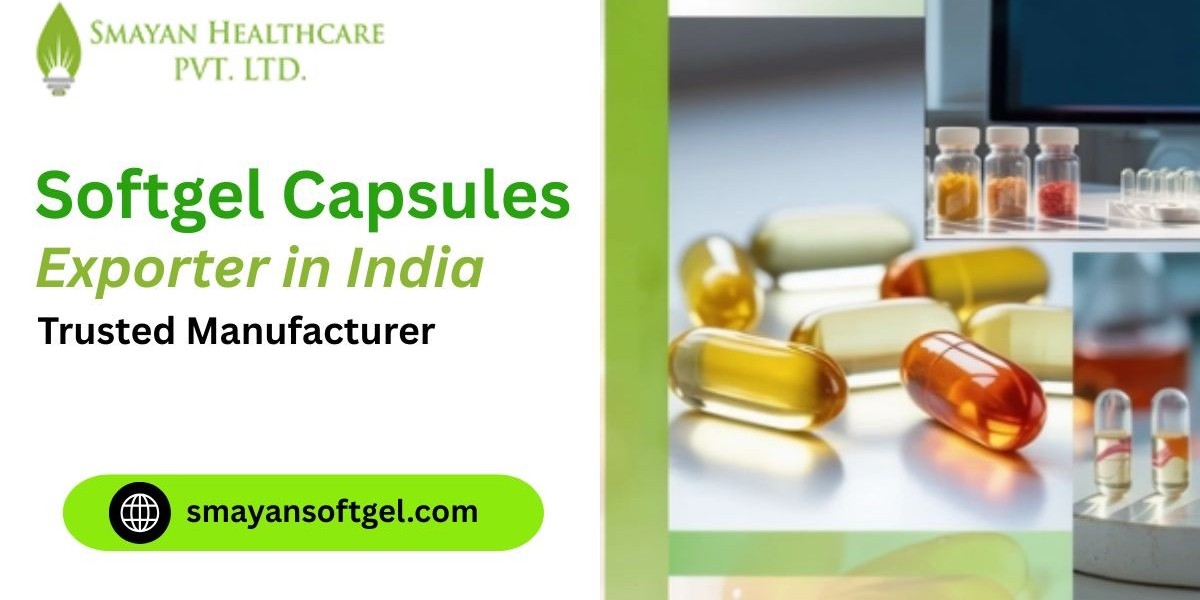

Softgel capsules have become a familiar dosage form in the pharmaceutical, nutraceutical, and dietary supplement industries. They are commonly used for products containing vitamins, oils, herbal ingredients, and other nutritional compounds. Their smooth shell and compact design offer consumers a convenient way to take different formulations, making softgels a popular choice for brands in both established and emerging markets.
The growth of the global wellness industry has also increased the need for dependable manufacturing and sourcing partners. Instead of investing in their own production facilities, many businesses prefer working with contract manufacturers that can produce, package, test, and prepare products for distribution. India has become an important sourcing destination because of its established pharmaceutical manufacturing base and growing nutraceutical capabilities.
For an international business, choosing the right softgel capsules exporter in India can make the sourcing process considerably easier. A capable exporter can support everything from formulation and production to quality checks, packaging, and export documentation, helping brands maintain a smoother path from product development to market launch.
Why Are Softgels Widely Used?
The structure of a softgel makes it suitable for a range of formulations. Unlike conventional tablets, softgels can contain liquid or oil-based fills, making them useful for ingredients that may not be ideal for traditional solid dosage forms.
They are particularly common in products containing omega oils and fat-soluble vitamins. Softgels can also be manufactured in different sizes, shapes, and colors, providing brands with options for creating a recognizable product appearance.
From a consumer perspective, the smooth outer shell and compact format can make softgels convenient to use. These characteristics have helped the dosage form maintain demand across different supplement categories.
India's Strength in Softgel Manufacturing
India has a long history of pharmaceutical production and has developed a broad network of manufacturers, suppliers, testing facilities, and technical professionals. This industrial foundation has supported the growth of nutraceutical and dietary supplement manufacturing as well.
For international buyers, India's manufacturing ecosystem can provide access to different production capabilities under one sourcing destination. Depending on the supplier, services may include formulation development, contract manufacturing, private-label production, packaging, quality testing, and export coordination.
Competitive manufacturing costs are another factor that attracts overseas buyers. However, businesses should balance cost with quality, reliability, regulatory preparedness, and production capacity when evaluating suppliers.
Common Softgel Formulations
Softgel capsules can be developed for numerous product categories. Some common examples include:
- Omega-3 and fish oil softgels
- Vitamin D3 capsules
- Vitamin E softgels
- Multivitamin formulations
- Coenzyme Q10 supplements
- Herbal oil-based products
- Essential fatty acid formulations
- Combination vitamin supplements
- Specialty nutritional products
The products available for export will depend on the manufacturer's capabilities, raw-material requirements, licenses, and the regulations applicable to the destination country.
Contract Manufacturing for International Brands
Not every company wants to establish its own manufacturing unit. Contract manufacturing provides an alternative by allowing brands to outsource production to an established facility.
The brand can provide its product concept and requirements, while the manufacturing partner manages the agreed production process. Depending on the arrangement, the manufacturer may also provide formulation assistance, testing, packaging, and other related services.
Private-label manufacturing can be particularly useful for businesses that want to launch products under their own brand name. This model allows companies to focus on marketing and distribution while relying on an experienced manufacturer for production.
The Role of Formulation Development
A successful softgel product starts with an appropriate formulation. Ingredients need to be selected and combined according to factors such as intended use, dosage, compatibility, stability, and market requirements.
Some brands may already have a finalized formula, while others may need assistance developing one. When working with a manufacturer, businesses should communicate their target market, desired ingredients, dosage strength, serving size, and product objectives.
An experienced technical team can then assess the manufacturing requirements and determine whether the proposed formulation is suitable for softgel production.
Quality Control Across Every Batch
Quality consistency is essential when products are intended for international markets. Buyers need confidence that every production batch will meet the agreed specifications.
Quality management may include raw-material checks, in-process monitoring, finished-product testing, packaging inspections, and batch documentation. Depending on the formulation, testing can cover parameters such as identity, potency, appearance, fill weight, microbial quality, and other applicable characteristics.
When evaluating a softgel capsules exporter in India, businesses should ask about the manufacturer's quality-control procedures and traceability systems. Proper documentation can also help brands maintain internal quality records and manage repeat orders more effectively.
Packaging for International Distribution
Softgel capsules may travel long distances before reaching distributors or consumers. Appropriate packaging is therefore important for protecting the product during storage and transportation.
Manufacturers may offer options such as bottles, blister packs, cartons, or other packaging formats. The appropriate choice depends on the formulation, shelf-life considerations, market requirements, and buyer preferences.
For private-label products, packaging can also be customized with the brand's design and required product information. Artwork, label specifications, pack sizes, and quantities should be finalized before production to avoid unnecessary delays.
Export Documentation and Market Requirements
Each international market can have its own rules for importing pharmaceutical and nutraceutical products. Buyers should therefore understand the requirements of their target country before placing a large order.
Depending on the shipment, documentation may include certificates of analysis, product specifications, commercial invoices, packing lists, certificates of origin, and other supporting documents.
A good exporter should communicate clearly about the documents it can provide and any information needed from the buyer. Early planning can help reduce problems during shipment and import procedures.
Choosing the Right Export Partner
A reliable exporter should be evaluated from both a manufacturing and business perspective. International buyers should consider production capacity, product expertise, quality systems, customization options, packaging capabilities, minimum order quantities, lead times, and export experience.
Communication is equally important. Suppliers should be able to provide clear information about formulations, quotations, production schedules, documentation, and shipping arrangements.
Businesses should also consider whether a supplier can support future growth. A manufacturer that can handle additional products or increasing order quantities may prove more valuable than a supplier suitable only for a single order.
Building Long-Term Supply Relationships
A dependable softgel capsules exporter in India can become more than a manufacturing vendor for an international brand. With consistent communication and clearly documented specifications, the relationship can develop into a long-term supply partnership.
As businesses expand, their requirements may change. They may introduce new formulations, increase production volumes, update packaging, or enter additional countries. Having an established manufacturing partner can make these changes easier to coordinate.
Long-term collaboration can also improve production planning and help both parties better understand quality expectations, packaging requirements, and delivery schedules.
Conclusion
Selecting the right softgel capsules exporter in India is an important step for businesses seeking reliable products for international markets. While manufacturing cost matters, buyers should also examine quality management, formulation capabilities, packaging, documentation, production capacity, and communication.
India's established pharmaceutical and nutraceutical manufacturing ecosystem offers global businesses a range of sourcing opportunities. With proper supplier evaluation and clearly defined requirements, brands can establish a dependable softgel supply chain and develop products suited to their target markets.






